





































| INDUSTRY | EXPERTISE | COUNTRY |
| Education & Research |
| Enterprise Networks |
| Axians Germany |
At Technische Hochschule Georg Agricola (THGA) in Bochum, upgrading campus Wi-Fi came with a clear requirement: better connectivity had to mean less work for the people managing it. With a small IT team already supporting the university’s digital environment, ease of administration was central to the project.
Replacing the aging infrastructure therefore required more than choosing new equipment. The university needed a network that could deliver reliable access for students and staff while keeping maintenance manageable. Axians helped translate that requirement into a solution suited to the team’s everyday operations.
Although the university initially planned to continue with HPE Aruba through an existing framework agreement, Axians proposed an alternative: Cisco Meraki. Its cloud-based management, centralized administration and automatic updates simplified the work of running campus Wi-Fi.
Rather than relying on specifications alone, the university assessed the options under real operating conditions. Axians provided test equipment and worked with Cisco to support a proof of concept. The campus’ IT team had an opportunity to evaluate both network stability and the practical demands of managing the proposed solution.
The trial confirmed that Cisco Meraki matched those priorities, paving the way for deployment across the campus.
From successful trial to campus-wide coverage
Axians supplied and commissioned 190 access points, using an existing wireless coverage survey to guide their placement. The new system entered operation in early 2025, with the university’s underlying Aruba switching infrastructure retained.
Alongside the deployment, Axians provided remote installation, training and complete documentation. This support prepared the internal team to take ownership of the environment and use its management capabilities confidently.
The resulting network provides stable Wi-Fi coverage indoors and outdoors. For students and staff, that means more consistent connectivity across campus. For the IT team, intuitive administration and automatic updates reduce the maintenance burden, letting them manage the system without additional resources.
“For our small IT team in particular, this is a real benefit,” says Helge Wiethoff, Head of the Computing Centre at the university’s campus.
That operational simplicity also gives the university a platform it can build on. The campus’ IT team has begun testing door, water and temperature sensors, exploring opportunities to extend the environment beyond Wi-Fi.
In practice, this means the university can offer students and staff consistent Wi-Fi access across indoor and outdoor spaces without expanding its IT team. Centralized management and automatic updates reduce the routine effort needed to maintain that service. The training and documentation provided by Axians also equip the university to manage the environment independently, while the platform’s modular design allows it to introduce additional capabilities as needs evolve.
By aligning the technology with the university’s capacity to operate it, Axians helped the university achieve a lasting improvement: reliable campus connectivity, a lighter administrative workload and room to develop new digital services.

Explore More Customer Stories
-

Paderborn University expands. Axians keeps it connected.
ReadAs Paderborn University expands its teaching and research facilities, students and staff need access to the digital services that support their work. Connecting new buildings to the campus network was therefore part of a broader task: extending access while replacing aging equipment to maintain a secure, efficient network.
-

Connected from day one
ReadMoving into a new campus means bringing an entire working environment into service. At Hochschule Ruhr West (HRW), Axians helped ensure that the networks were ready when the doors opened.
-
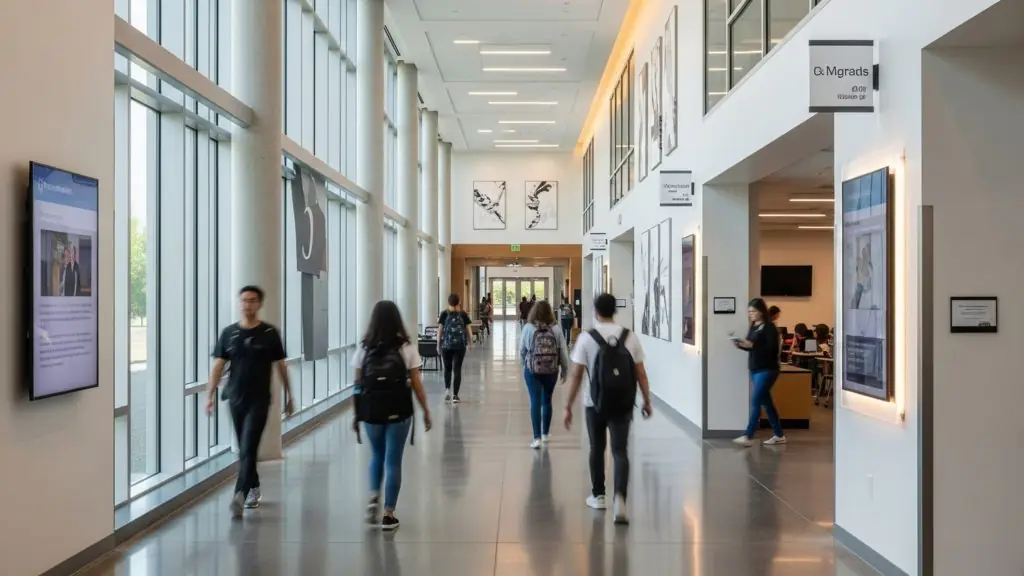
A better-connected campus starts with simpler IT
ReadAt Technische Hochschule Georg Agricola (THGA) in Bochum, upgrading campus Wi-Fi came with a clear requirement: better connectivity had to mean less work for the people managing it. With a small IT team already supporting the university’s digital environment, ease of administration was central to the project.
-

Delivering high-performance connectivity with an end-to-end 5G platform
ReadAccess to real industrial 5G environments is becoming a key differentiator in technical education. As use cases such as robotics, automation and real-time data processing become more widespread, the limitations of traditional wireless networks became increasingly apparent.
-

University of Santiago in Spain strengthens Cloud Security with Axians
ReadThe University of Santiago de Compostela, serving over 30,000 users and students, needed to modernize and secure its cloud infrastructure to protect critical academic and research services from evolving cyber threats.
-

Axians implements SAP at the Military University of Technology
ReadThe Military University of Technology (WAT) in Warsaw educates over 9,000 students, including more than 3,000 officer cadets. It offers 20 study programs across eight faculties, supported by 956 academic teachers.
-

Digital evolution at Akademia Górniczo-Hutnicza: Cloud ERP implementation with Axians
ReadAkademia Górniczo-Hutnicza (AGH) im. Stanisława Staszica in Kraków is one of Poland’s leading technical universities, ranked among the top ten research institutions in the country. With a community of over 4,000 staff members and nearly 20,000 students, AGH continually seeks to enhance its operations through technological advancements.
-

A highly interactive tele-education system for Fujirebio Europe with Axians
ReadA virtual classroom for remote training to overcome COVID-19 travel restrictions.
-
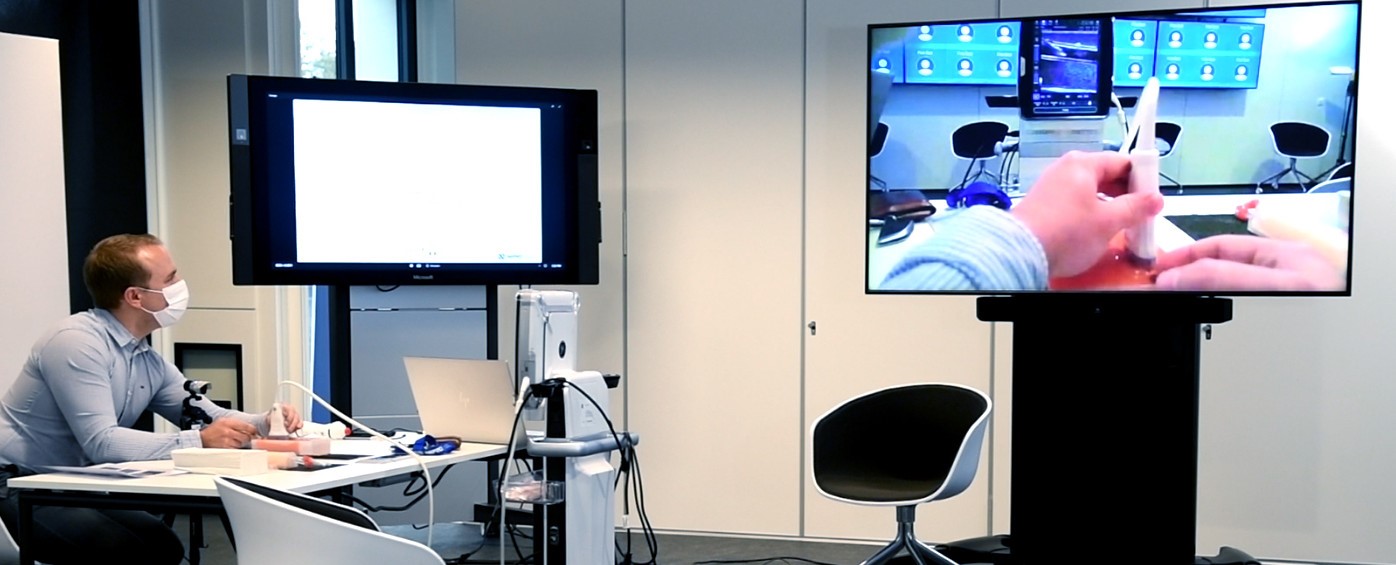
A hybrid virtual classroom for medical training with Nipro Europe and Axians
ReadA highly interactive tele-education system to facilitate remote learning.
-

The Landstede Group focus on education innovation through Network as a Service
ReadThanks to NaaS as a future-proof solution, the educational institution is now expecting considerable cost savings and the chance to free up more time from their IT department to focus on innovation in education.
-

Axians develops an innovative technological platform for NOVA School of Business and Economics
ReadAxians is set to assume the role of strategy advisor in a consortium of technology companies responsible for IT at Nova School of Business and Economics.
-

Axians provides a world-class information and communications system at Mohammed VI Polytechnic University
ReadA state-of-the-art ICT system integrating the most advanced technology solutions.
-
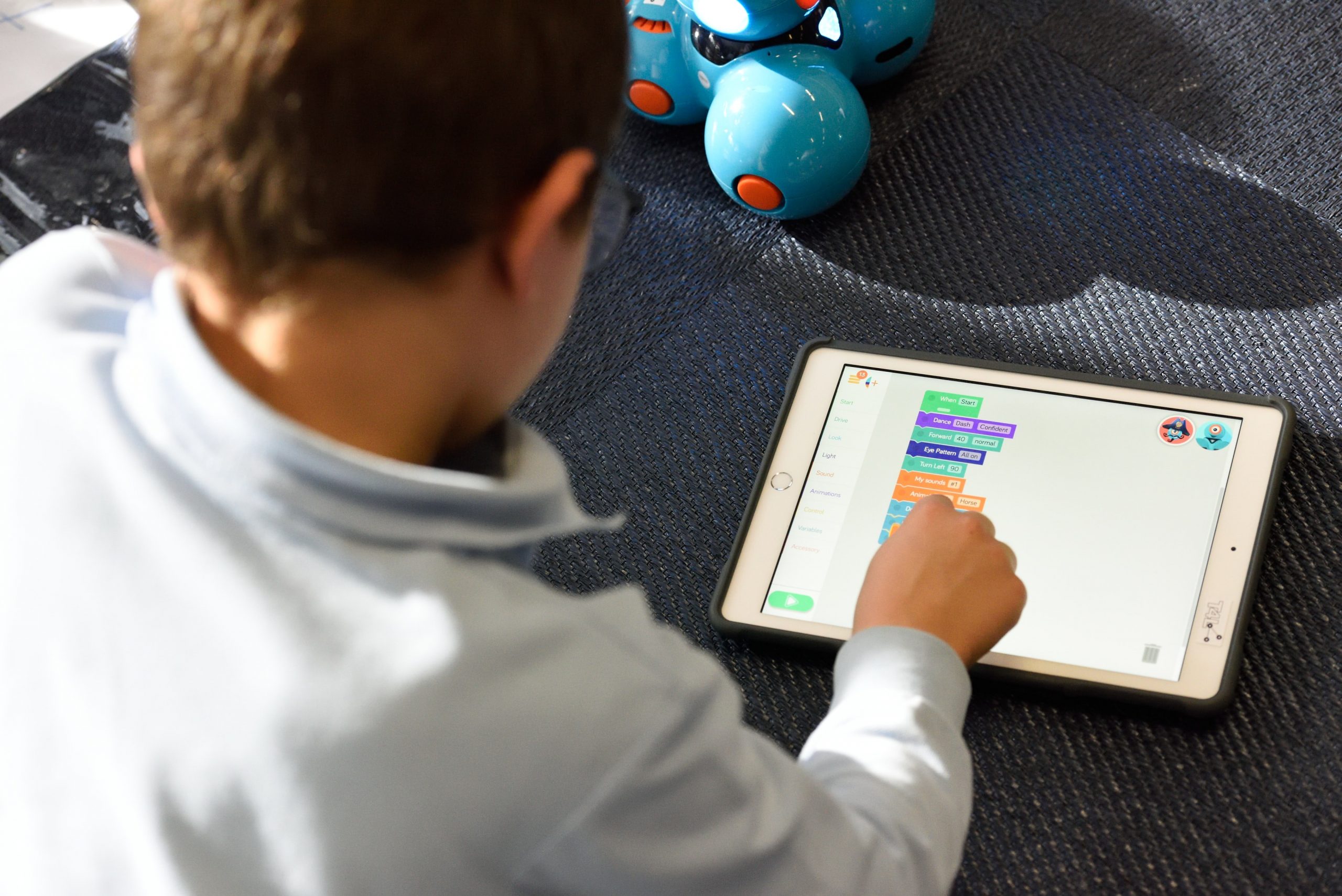
Education platform works with Axians for online learning
ReadA true performant and scalable web platform to handle the peak number of users during back-to-school season.
-

EDHEC Business School works with Axians to develop a secured international network
ReadConnecting EDHEC sites worldwide to enhance the student experience.
-

Axians Implements Cisco ACI at Aventus
ReadSoftware-defined architecture for appealing and sophisticated educational services.